What it is
What is salt system conversion?
A salt chlorine generator (also called a salt cell or chlorinator) makes chlorine on demand from dissolved salt in your pool water. You stop buying, storing, and handling liquid or tab chlorine. The water still has chlorine in it — it's just produced automatically and at a steadier level.
Converting an existing chlorine pool typically means installing a salt cell and control unit on your equipment pad, adding pool-grade salt, and balancing the water. Most pools are good candidates after a quick on-site inspection.
Benefits
Why homeowners convert
Softer-feeling water
Gentler on skin, eyes, and hair — many homeowners say it feels silkier.
No harsh chlorine smell
Steadier, lower free-chlorine swings mean less of that pool-store smell.
Steadier sanitizer
The cell produces chlorine continuously while the pump runs.
Lower ongoing chemical cost
Stop buying jugs and tabs every week — most of your chemistry comes from salt.
Honest considerations
What to know before you convert
Upfront equipment cost
A quality salt system is an investment up front. It pays back over time in lower chemical spend.
The salt cell wears out
Cells typically last several years and then need to be replaced — plan for this as part of long-term cost.
Older fixtures can be sensitive
Some heaters, soft natural stone, and older metal fittings don't love salt. We inspect before recommending.
Local — Cape Coral
Why salt conversion fits Cape Coral
Year-round swim season
The Southwest Florida climate keeps pools in use most of the year, which makes the steady, automated chlorination of a salt system especially convenient.
Screened lanai pools
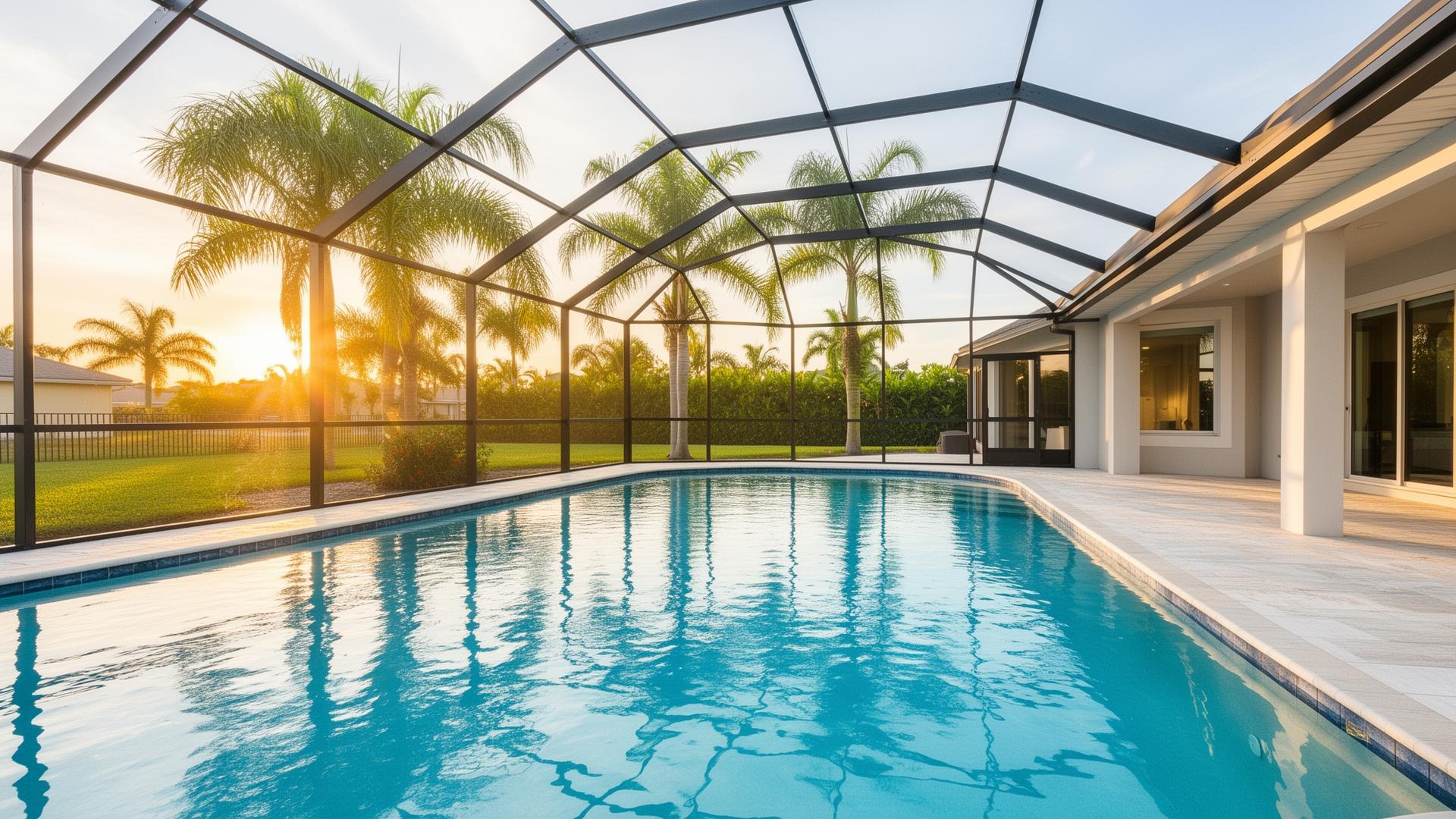
Screened enclosures are everywhere here. Salt water's gentler feel and milder smell are easier to enjoy in an enclosed lanai.
Saltwater is common locally
Many Cape Coral pools are already salt — parts, service, and know-how are widely available.
Our process
Simple, transparent, done right
- 1
Free consultation & water test
We come out, inspect your equipment, and test the water.
- 2
Recommend the right salt system
We size the chlorinator to your pool — no oversold equipment.
- 3
Professional install
Clean install on your equipment pad with proper bonding and plumbing.
- 4
Balance & start the water
Add salt, balance chemistry, and bring the system online.
- 5
Walkthrough on maintenance
We show you what to check weekly so it stays effortless.
Pricing & financing
Every pool is different
We don't publish one-size-fits-all prices — pool size, existing equipment, and chlorinator choice all change the number. Typical installs range from $X,XXX to $X,XXX — request a free quote for your pool.
Financing available — ask about flexible monthly payment options.
Local details
Permits & code in Cape Coral
Pool safety barriers
Florida requires residential pools to have an approved safety barrier (such as a fence, screen enclosure, or compliant pool cover). Specific requirements should be verified with the City of Cape Coral before any work.
Permits for pool equipment
Pool equipment work in Cape Coral is generally permitted through the local building department. Exact permit steps, fees, and code references should be verified with the city — we handle this as part of the install.
Common pool types here
Most Cape Coral homes have in-ground gunite or marcite pools with a screened lanai. These are typically straightforward salt-conversion candidates.
What customers say
Reviews
Sample reviews shown below — replace with real customer testimonials before launch.
“Placeholder review — replace with a real customer testimonial once verified.”
“Placeholder review — replace with a real customer testimonial once verified.”
“Placeholder review — replace with a real customer testimonial once verified.”
Service area
Proudly serving Cape Coral and nearby
- Cape Coral
- Fort Myers
- North Fort Myers
- Pine Island
- Matlacha
- Sanibel
- Bonita Springs
FAQ
Common questions
Still have questions? Call (555) 555-0123 or request a free quote.